Table Of Content

The first stage of the design thinking process focuses on user-centric research. You want to gain an empathic understanding of the problem you are trying to solve. Consult experts to find out more about the area of concern and conduct observations to engage and empathize with your users. You may also want to immerse yourself in your users’ physical environment to gain a deeper, personal understanding of the issues involved—as well as their experiences and motivations. Empathy is crucial to problem solving and a human-centered design process as it allows design thinkers to set aside their own assumptions about the world and gain real insight into users and their needs.
UX design is more successful than ever, but its leaders are losing hope. Here's why - Fast Company
UX design is more successful than ever, but its leaders are losing hope. Here's why.
Posted: Thu, 03 Jun 2021 07:00:00 GMT [source]
You’ll Love Being a UX Researcher If You…
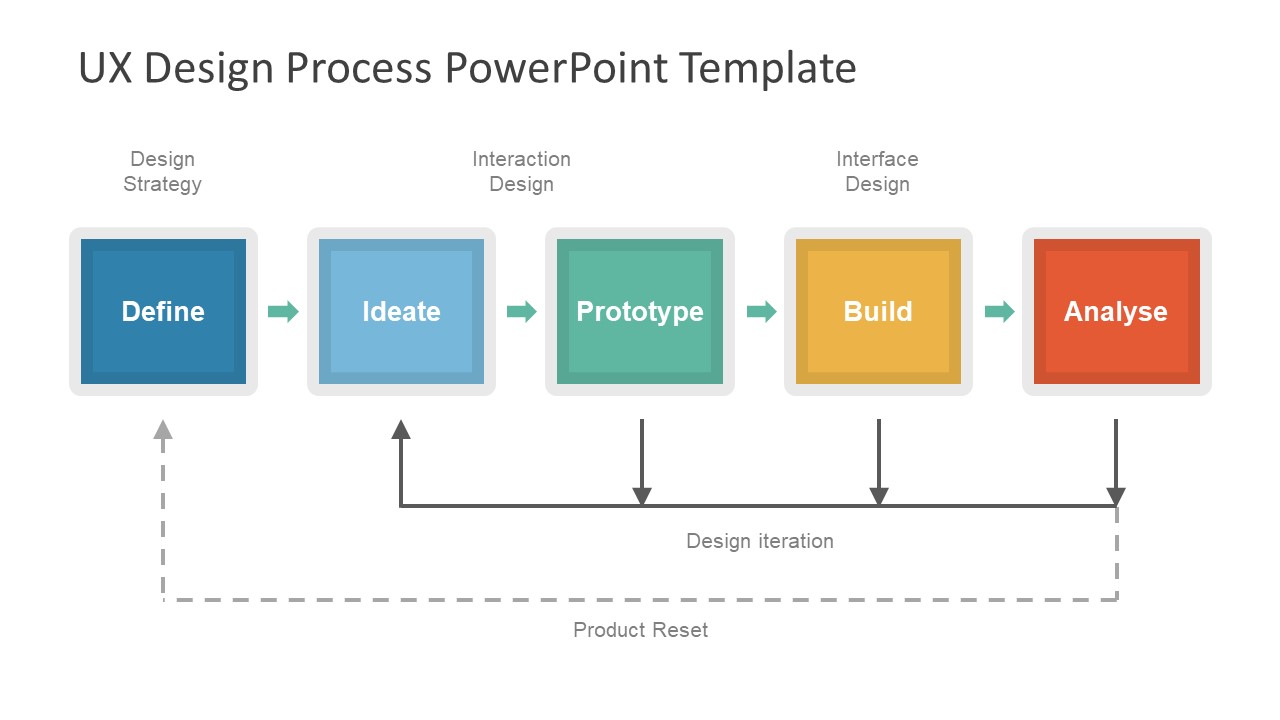
Throughout the UX design process, you’ll work closely with developers—the people who will code your designs into fully functional products! If you’ve not had much experience working with web developers in your previous jobs, then before you start pursuing a career as a UX designer, it’s important to consider this crucial aspect of the role. Product designers and UX designers collaborate by sharing insights, exchanging ideas, and working together to align the product’s visual and interaction design with the user experience goals. They collaborate throughout the design process to ensure a cohesive and user-centered product. Now it’s time to bring your design to life with visual elements that make your digital product visually appealing and engaging.
LogRocket: Analytics that give you UX insights without the need for interviews
When designing a new product, you don’t necessarily know how users will respond to it in the real world. Even if you’ve done some research and designed a product you think users will love, the way to success is through the user experience (UX) design process. One of the ways to maintain a user-centered mindset is by empathizing with users.
Top Designers Use Data.
Select a program, get paired with an expert mentor and tutor, and become a job-ready designer, developer, or analyst from scratch, or your money back. A/B testing (also known as split testing) is a method of comparing two versions of a web page, product, email, or system, and seeing which performs better. By creating and testing an A and B version, you can try new design changes, test hypotheses, and improve your user’s responses. The goal of a split test is to look at differences in the behavior of two groups and measure the impact of each version on an actionable metric. The advantage of this type of testing over remote user testing is that the very actions the user takes, not just his or her opinions on a product, can be noted.
During the wireframing phase, exercises like Crazy 8, How May We, etc are done. Also based on wireframe and feedback we decide what to be selected for the digital high-fidelity wireframes. Going based on what is finalized during paper wireframing, the gears are shifted toward tools like Figma, Sketch Adobe XD, etc.
Because UXPin is code-based, prototypes feature higher fidelity and more functionality than image-based prototyping tools. Take prototyping to the next level using UXPin Merge–a tool that connects UXPin’s design editor to a component library, so designers can build fully functioning prototypes their dev’s components. You’ll start the product development process with a concrete profile of the target user and valuable design priorities that will set the product up for success. Any successful product or service, such as a website or app, needs good UX design. With it, customers will remain satisfied and (ideally) loyal to your business. Without it, your user can be left frustrated and bitter with your product…resulting in, ultimately, fewer users.
Now that you understand your users, the second step in the UX design process is to design. Gain confidence using product data to design better, justify design decisions, and win stakeholders. This worked pretty well in an age when digital products were updated at intervals of several years (think of software like Microsoft Office). But during the 2000s the pace quickened, and it became essential for product teams to work more quickly and responsively. The UX design process therefore took a linear format, through the stages of gathering requirements, designing a solution, implementation, verification, and maintenance.
When you’re scrolling through a website or an app, and everything just flows smoothly from one section to the next? Ever notice how you tend to work faster when you have real-time feedback? Postel’s Law reminds us to build flexibility into our systems so they can interpret data with precision while also being resilient enough to handle variations without breaking. With UserTesting’s on-demand platform, you uncover ‘the why’ behind customer interactions. In just a few hours, you can capture the critical human insights you need to confidently deliver what your customers want and expect.
What Is Empathy and Why Is It So Important in Design Thinking?
The job of a UX designer depends heavily on the nature of the company they are working for, and the difference between one UX designer role and another can be dramatic. In this final section, we’re going to discuss the role of the UX designer at both small and large companies and the UX design skills needed for each. The benefit of remote user testing is that users are interacting with your product in an environment that is already familiar to them (e.g. their home or office). This takes away the potential layer of anxiety or uncertainty when visiting somewhere new, which might otherwise affect results. The participants, facilitators, and observers are all located separately but connected online. Testing is a misunderstood art, and start-ups and entrepreneurs are often put off by it because of concerns regarding cost and time.
Integrating these into the UX Design Process means creating interfaces that feel natural, fluid, and intuitive, reducing the reliance on traditional navigation buttons. Every interaction, every touchpoint, becomes a part of a larger narrative, crafting memorable experiences that resonate long after the user has exited an application. If you simplify one aspect of a user interface, the complexity is shifted elsewhere. It underscores the importance of thoughtful design decisions to manage complexity effectively. To mitigate risk, the developers should be involved throughout the entire process, from problem definition to ideation to prototyping, through development and release. A design lead or project manager typically leads these meetings if they’re part of the team structure.
Becoming a UX designer: why is it worthy and what do you need to start - Хабр
Becoming a UX designer: why is it worthy and what do you need to start.
Posted: Wed, 03 Apr 2024 07:00:00 GMT [source]
The process and tactics detailed aren’t exhaustive, but they’re a great place to start for any UX design project. In this stage, the UX designers lead the creation of prototypes from the most promising ideas developed in the ideation phase. They also rely on personas, journey maps and other deliverables to ensure the product meets users' needs. This publication is highly influential as it introduced the concept of contextual inquiry, a user-centered design method that involves observing and interviewing users in their natural environment.
On the other hand, the Design Thinking Process is a broader, problem-solving framework. It starts with empathizing with users, defining the problem, ideating potential solutions, prototyping, and testing. While it shares some steps with the UX Design Process, Design Thinking is not exclusive to digital products.
For example, a common problem among your target audience might be that they struggle to stay on top of their monthly budget. We use wireframes to connect the visual design of the site to its information architecture. Wireframing helps a UX designer decide on the main functionality for that page and prepare the UX team for prototyping. Following the 8-step UX design process is a proven way to ensure that you are creating user centered products that are data-driven and effective. After launch, the product—whether that's a website, app, or other digital product—is not done.
Later the team can apply a more critical and practical eye to those ideas to see what is possible and most effective. This stage also includes understanding the needs of your stakeholders. “Stakeholders” are developers, management, marketing, and anyone with a vested interest in a solution to the problem. If you’re still unsure, we recommend that you go for the UX designer role.
We’re not sure that university is the best option for those seeking a change of career direction; it’s not just the money required, but also the time taken. You could be earning and learning using a different method rather than spending 3 or 4 years on a bachelor’s degree or 2 years on a Master’s program. However, if you do decide to go the university route, you’ll want to spend a lot of time researching exactly the right program for you. We’ve got a couple of examples for you here but there are literally hundreds of programs globally and we couldn’t hope to cover them all. Graphic designers already speak the language of design; they just need to brush up their skills to include those that are unique to UX design.
The first step of UX research is setting the goals and objectives of your research. Prototypes can be low-fi or hi-fi, and they can be created using a variety of tools, such as InVision, Justinmind, and Axure. Out of this initial kick-off meeting, you’ll likely have a set of specs to work from, as well as a low-fi concept sketch. This gives you a basic outline that can then be used in the next step.


No comments:
Post a Comment